 Merken
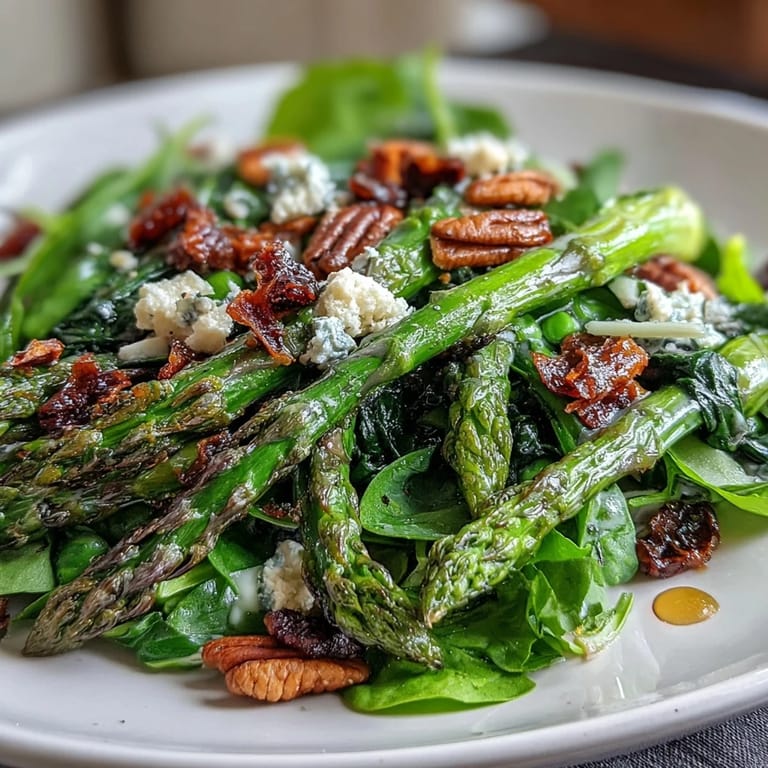
 There's something about the first warm day of spring that makes me want to abandon cooked food entirely. Last April, I was standing in my kitchen with a bunch of impossibly thin asparagus I'd grabbed from the farmers market, and instead of roasting it, I found myself reaching for the vegetable peeler. The ribbons fell like silk onto my cutting board, and I thought: why not just build an entire salad around this moment? That's how this shaved asparagus and pea salad came to be—a dish that tastes like the season itself, bright and unapologetic in its simplicity.
I made this for my neighbor last summer when she mentioned being tired of heavy meals, and she sat on my porch eating it straight from the bowl while we talked about her garden. That's when I knew it wasn't just a recipe—it was the kind of thing people ask you to make again because it makes them feel lighter, somehow. It's become my go-to when I want to bring something to a gathering that feels effortless but tastes like you actually tried.
Ingredients
- Fresh asparagus (about 300 g): Look for thin to medium stalks with tight tips; they're more tender and easier to shave into delicate ribbons without falling apart.
- Fresh or frozen green peas (150 g): If using frozen, thaw them at room temperature first so they don't water down the dressing, and honestly, they taste just as good as fresh.
- Baby arugula or mixed spring greens (50 g): This is your salad base, so choose something with a bit of personality—arugula adds a subtle peppery note that plays beautifully with lemon.
- Radishes (2 sliced thin): They bring both crunch and a gentle bite that keeps the whole thing from feeling too delicate.
- Shaved Parmesan cheese (30 g): Use a vegetable peeler to shave it yourself; the paper-thin pieces melt slightly into the warm salad better than pre-shredded cheese.
- Toasted pine nuts or slivered almonds (30 g): Toast them in a dry pan for two minutes before using—this small step transforms them from plain to absolutely necessary.
- Extra-virgin olive oil (3 tbsp): This is where flavor lives, so don't skimp on quality; a fruity, peppery oil makes a real difference.
- Fresh lemon juice (2 tbsp): Squeeze it just before you make the dressing; bottled juice tastes flat by comparison.
- Lemon zest (1 tsp): Those bright yellow bits are concentrated lemon essence, and they're what make people stop mid-bite and ask what you did differently.
- Honey or maple syrup (1 tsp): A tiny touch of sweetness rounds out the acidity and makes the dressing taste more balanced than sharp.
- Dijon mustard (1 tsp): It emulsifies the dressing and adds a whisper of complexity that you can't quite name but definitely taste.
- Sea salt and black pepper: Finish with both, and trust that fresh-ground pepper changes everything.
Tired of Takeout? 🥡
Get 10 meals you can make faster than delivery arrives. Seriously.
One email. No spam. Unsubscribe anytime.
Instructions
- Shave the asparagus into silky ribbons:
- Hold each stalk steady and run your vegetable peeler lengthwise along the side, letting the ribbons curl onto the cutting board. You'll hear a soft scraping sound that's oddly meditative; just stop before you reach the tough center core.
- Build your salad foundation:
- Pile the asparagus ribbons into your largest bowl, then scatter the peas, greens, and radish slices on top. Don't toss yet—let each ingredient have its moment to catch the light.
- Shake the dressing into being:
- Pour the olive oil, lemon juice, zest, honey, mustard, salt, and pepper into a jar and shake it like you mean it for about thirty seconds until it emulsifies and looks slightly cloudy. This matters more than whisking by hand—the motion really does the work.
- Toss gently to coat:
- Pour the dressing over the salad and use two spoons or forks to lift and turn everything together, being careful not to bruise the delicate greens. The asparagus ribbons will soften just slightly and soak up all that citrus brightness.
- Crown it with cheese and nuts:
- Scatter the Parmesan shavings and toasted nuts over the top, letting them nestle into the leaves. If you toss again, do it with barely a whisper of movement.
- Serve straight away:
- This salad is a sprint, not a marathon—eat it while everything is still at its calmest and brightest. The moment you plate it, it becomes something else, so don't wait.
 Merken
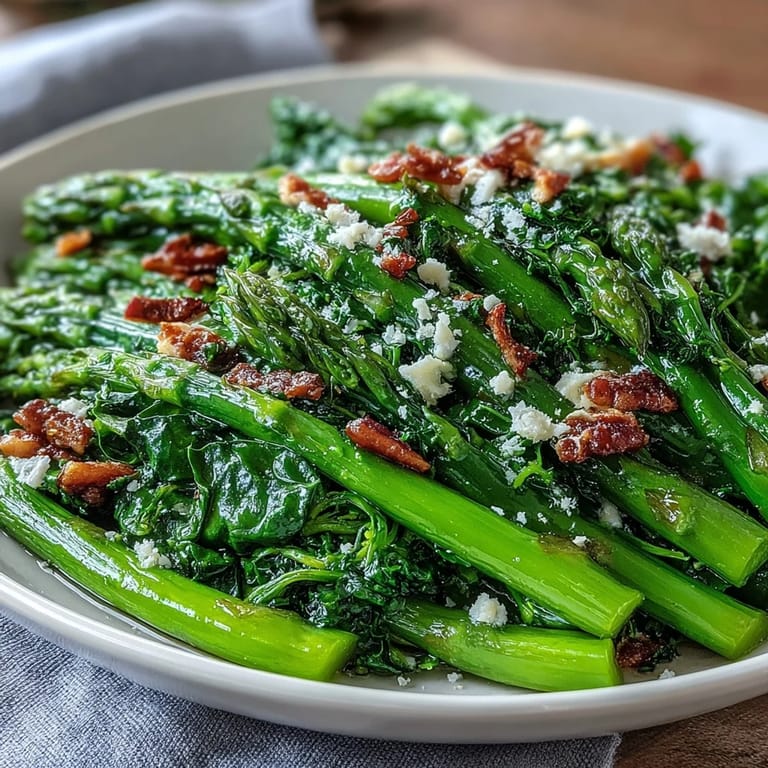
 My mother tried this for the first time at a lunch I made, and she asked if she could take the leftover dressing home to pour over other things. That's when I realized it transcends the salad itself—it's a simple, perfect dressing you'll find yourself reaching for again and again. It's become less about the recipe and more about the little moments of spring you can bottle and use whenever you need to remember what fresh tastes like.
The Art of Shaving Vegetables
Once you start using a vegetable peeler on asparagus, zucchini, and even carrots, you'll wonder why you ever bothered slicing them any other way. The thin ribbons catch dressing differently than chunks, and they cook (or don't cook, in this case) completely differently too. I've started keeping my peeler on the counter now instead of buried in a drawer, just for the impulse to shave something raw when I need a salad in a hurry.
Lemon Dressing Beyond Salad
This dressing has a life of its own that extends far beyond a spring salad. I've spooned it over roasted vegetables, drizzled it on grilled fish, and even used it to dress a plate of fresh mozzarella and tomatoes. The balance of acid, mustard, and a whisper of honey makes it versatile enough to save in a jar in the fridge for up to five days, though it does separate, which is completely fine.
Ways to Make It Your Own
The skeleton of this salad is forgiving and loves improvisation. Depending on what's in season or what's calling to you, you can swap ingredients without losing the spirit of the dish. The core idea—delicate vegetables, bright dressing, toasted crunch—stays constant while everything else becomes a canvas for your own spring or summer moment.
- Trade the peas for fava beans, snap peas, or even shelled edamame and the salad transforms into something equally delicious.
- Fresh mint or basil scattered over the top adds a layer of flavor that makes people pause and try to identify what just happened in their mouth.
- If Parmesan feels too heavy, crumbled feta or even crispy chickpeas give you the salty element without the dairy.
 Merken
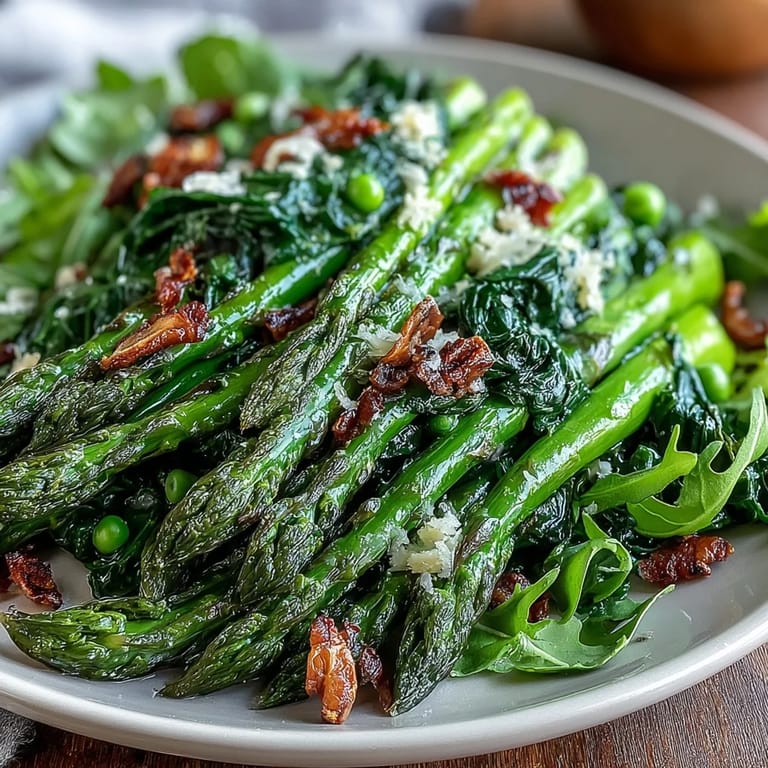
 This salad has taught me that sometimes the best cooking is the lightest cooking—that restraint and freshness can be just as satisfying as anything that spends time in a pan. Every time I make it, I'm reminded that spring is a state of mind you can create in your kitchen, even if the season outside is long gone.
Fragen & Antworten zum Rezept
- → Wie schäle ich Spargel richtig für den Salat?
Verwende einen Gemüseschäler, um die Spargelstangen längs in dünne Streifen zu schneiden. So erhältst du zarte, essbare Ribbons.
- → Kann man tiefgekühlte Erbsen verwenden?
Ja, aufgetaute tiefgekühlte Erbsen eignen sich hervorragend und bringen die nötige Süße und Textur.
- → Welche Alternativen gibt es zu Parmesan und Pinienkernen?
Für eine vegane Option kannst du den Käse weglassen oder durch pflanzliche Alternativen ersetzen. Statt Pinienkerne passen auch geröstete Mandeln gut.
- → Wie bereite ich das Zitronendressing zu?
Alle Zutaten wie Olivenöl, Zitronensaft, Zitronenschale, Honig, Senf, Salz und Pfeffer gut vermischen, bis eine gleichmäßige Emulsion entsteht.
- → Wie serviere ich den Salat optimal?
Den Salat direkt nach dem Anrichten servieren, um Frische und Knackigkeit zu erhalten. Als Beilage passt er gut zu gegrilltem Fisch oder Geflügel.
- → Kann ich noch frische Kräuter hinzufügen?
Ja, frische Minze oder Basilikum ergänzen die Aromen und verleihen dem Gericht eine zusätzliche Frische.