 Merken
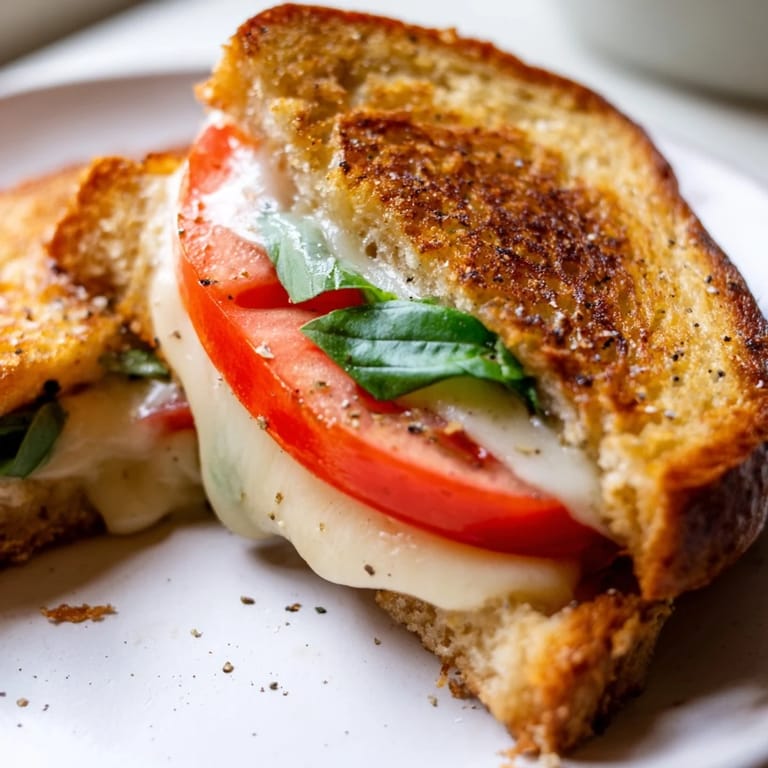
 There's something about the smell of butter hitting a hot pan that makes me stop whatever I'm doing. One lazy Saturday afternoon, I had tomatoes that were perfectly ripe, basil from my kitchen counter threatening to wilt, and the simple idea that these three things belonged between two slices of bread. That first bite—crispy outside, melted cheese pooling with warm tomato juice inside—felt like I'd cracked some kind of code. I've made this sandwich dozens of times since, and it never gets old.
I made this for a friend who'd just moved into a new apartment with barely any furniture and no real kitchen setup. We used her tiny electric skillet perched on a cardboard box, and somehow it became this moment of celebration—like we were making something that said 'you're going to be okay here.' She still texts me asking how to make it.
Ingredients
- Sourdough or country-style bread: The crust matters here—you want something sturdy enough to hold up to butter and heat without falling apart, but with enough character to taste good, not just act as a vehicle.
- Mozzarella cheese: Fresh or low-moisture works, sliced or shredded—I prefer slices because they melt more evenly, but honestly, shredded works beautifully too.
- Unsalted butter, softened: Soft butter spreads without tearing the bread, and unsalted lets you control the salt in the sandwich.
- Ripe tomato: This is where the sandwich lives or dies—a mealy tomato makes everything feel sad, so pick one that's actually fragrant and feels heavy in your hand.
- Fresh basil leaves: The green stuff that makes this sandwich taste like something you made with intention, not just something you assembled.
- Salt and freshly ground black pepper: Just enough to make the tomato taste like itself.
Tired of Takeout? 🥡
Get 10 meals you can make faster than delivery arrives. Seriously.
One email. No spam. Unsubscribe anytime.
Instructions
- Butter your bread:
- Spread soft butter on one side of each slice—not too thick, but enough that it'll turn golden and crispy. Think about spreading it like you're painting, not pressing.
- Layer with care:
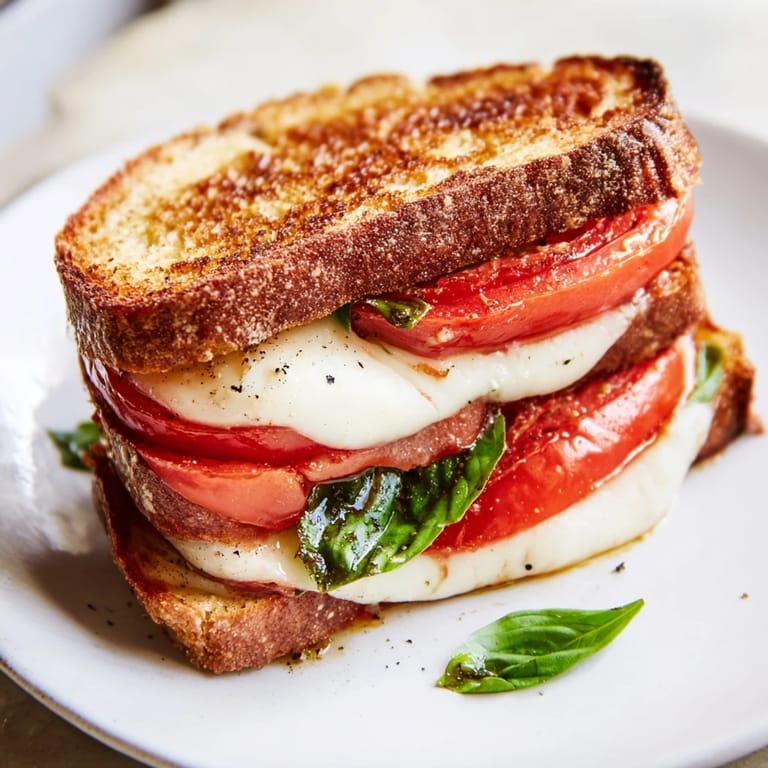
- Put two slices down, buttered side facing your cutting board. Add your mozzarella first (it's the glue), then tomato slices in a single layer, then basil leaves scattered on top, then a whisper of salt and pepper. The order matters because it keeps everything from sliding around.
- Close it up:
- Top with the remaining bread slices, buttered side facing up and ready to meet the heat.
- Heat your pan:
- Medium heat on a skillet or griddle—too hot and the outside burns before the cheese melts, too cool and the bread stays pale and sad.
- Cook with patience:
- Place the sandwich down and listen for the gentle sizzle. Let it sit for 3 to 4 minutes without moving it around—this is how you get that golden crust. When the edges start looking toasted, press gently with your spatula and flip.
- Finish it off:
- Another 3 to 4 minutes on the second side until both sides are deep golden and the cheese is completely melted and practically glowing inside.
- Rest and serve:
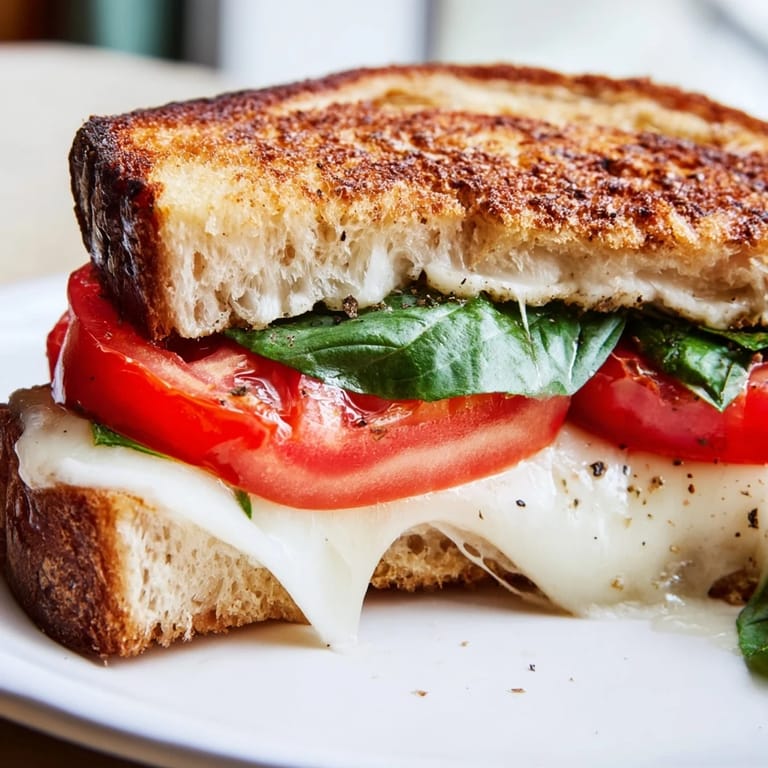
- Let it cool for just a minute—this helps the cheese set slightly so it doesn't pour out when you bite into it. Slice it diagonally because that's how it tastes better, and serve while the inside is still warm.
 Merken
 Someone once told me that the best meals are the ones that feel both simple and a little bit special, and that's exactly what this sandwich is. It's nothing fancy, but when you're eating it warm, with the cheese still soft and the basil flavor bright and sharp, it feels like you're taking care of yourself in a quiet way.
Why This Sandwich Wins Every Time
There's no recipe police coming to fine you if you mess this up, which is the beautiful part. I've made it with leftover basil from pasta night, tomatoes from the farmer's market that were almost too beautiful to cut into, and butter that was maybe a little too salted. Every version still tastes like something worth making. The formula is flexible enough to absorb your choices and your mood, but rigid enough that you can't really go wrong.
The Tomato Question
I've spent embarrassing amounts of time thinking about tomatoes. In summer, when they're at their peak, this sandwich is practically transcendent. In winter, a good hothouse tomato or even a high-quality canned tomato that you've drained well can work in a pinch, though it won't be quite the same thing. The point is: don't force tomatoes that taste like sadness. A sandwich is only as good as its weakest ingredient, and tomatoes are usually the star, so give them the respect they deserve.
Make It Your Own
Once you've made this basic version a few times and it feels like second nature, that's when the real fun starts. I've added thin slices of red onion for a sharp bite, smeared pesto on the inside for richness, added a sliver of prosciutto for salt and smoke, or layered in fresh mozzarella instead of regular mozzarella for something creamier and more delicate. The skeleton of the sandwich is strong enough to hold whatever you want to build onto it. Here are my favorite tweaks when I'm feeling adventurous.
- A thin spread of pesto or sun-dried tomato paste adds depth and makes the whole thing taste more intentional.
- A tiny drizzle of balsamic vinegar over the tomato before you close the sandwich adds a sweet-tangy complexity that feels fancy without any extra work.
- Thinly sliced red onion or a handful of arugula brings a peppery crunch that cuts through the richness of the melted cheese.
 Merken
 This sandwich is a reminder that sometimes the most satisfying food is the kind that takes a handful of really good ingredients and nothing else. Make it, eat it warm, and let the cheese do its thing.
Fragen & Antworten zum Rezept
- → Welches Brot eignet sich am besten?
Sauerteig- oder Landbrot mit fester Kruste bietet eine perfekte Basis für knuspriges Rösten und hält die Füllung gut zusammen.
- → Kann man den Mozzarella ersetzen?
Ja, Provolone oder Cheddar sind gute Alternativen, die für einen kräftigeren Geschmack sorgen.
- → Wie verhindert man, dass das Brot anbrennt?
Die Pfanne bei mittlerer Hitze verwenden und die Sandwiches sanft andrücken, damit sie gleichmäßig rösten ohne zu verbrennen.
- → Welche Kräuter passen gut neben Basilikum?
Zusätzlich zu Basilikum eignen sich frischer Oregano oder Rucola für eine herzhafte Frische.
- → Wie lässt sich der Geschmack variieren?
Ein Spritzer Balsamico-Glasur oder eine Schicht Babyspinat bringen interessante Geschmacksnuancen ins Gericht.