 Merken
 Scrolling through TikTok one evening, I stumbled upon this viral salmon bowl trend and thought, why not give it a shot? What started as a casual experiment in my kitchen turned into something I now make at least twice a week—there's something about the contrast of crispy salmon against cool, fresh vegetables that just works. The first time I assembled it, I was struck by how restaurant-quality it looked, yet how simple it actually was to pull together. Now whenever friends ask what I'm having for dinner, I'm already reaching for that salmon fillet.
I remember making this for my partner on a Thursday when we were both craving something light but satisfying, and they actually put their phone down mid-meal to focus entirely on eating. That's when I knew this recipe had staying power—not just as a TikTok trend, but as something that actually nourishes both the body and the moment.
Ingredients
- Salmon: 300 g skinless salmon fillet, cut into 2 cm cubes—the key is keeping the pieces uniform so they cook evenly, and cubing them yourself gives you control over texture that pre-cut options rarely deliver.
- Soy sauce: 1 tbsp—this is your base umami layer, though I've learned that a good quality soy sauce makes a surprising difference in the final flavor.
- Sesame oil: 1 tbsp—just a touch adds that nutty depth that makes people ask what your secret ingredient is.
- Sriracha: 1 tsp optional—I used to skip this until I realized it adds complexity beyond just heat.
- Honey or maple syrup: 1 tsp—this tiny bit of sweetness balances the salty and spicy elements in a way that feels almost invisible but completely necessary.
- Garlic powder: 1/2 tsp—fresh garlic will burn at high heat, but powder dissolves evenly into the marinade.
- Black pepper: 1/2 tsp—freshly cracked makes a subtle but noticeable difference.
- Jasmine or sushi rice: 200 g cooked—the slight sweetness of jasmine complements this bowl beautifully.
- Cucumber: 1/2 cucumber, thinly sliced—the coolness is essential, so slice it just before serving.
- Avocado: 1 small avocado, sliced—ripe but still firm, so it holds its shape when you plate it.
- Pickled ginger: 2 tbsp—this cuts through the richness and provides a palate-cleansing brightness.
- Carrot: 1 small carrot, julienned—the raw crunch and slight sweetness add textural contrast.
- Nori: 1 sheet cut into strips—toasted seaweed brings an oceanic quality that ties everything together.
- Sesame seeds: 1 tbsp—toasted if you have them, which deepens their flavor significantly.
- Scallions: 2 tbsp sliced—the sharp onion note right at the end brightens every bite.
- Mayonnaise: 2 tbsp—full fat is best; it's the backbone of your sauce.
- Sriracha: 1 tbsp for the sauce—this is where the spice kicks in.
- Lime juice: 1 tsp—fresh lime, never bottled if you can help it.
Tired of Takeout? 🥡
Get 10 meals you can make faster than delivery arrives. Seriously.
One email. No spam. Unsubscribe anytime.
Instructions
- Marinate the salmon:
- Combine your salmon cubes with soy sauce, sesame oil, sriracha, honey, garlic powder, and black pepper in a bowl and let them sit for 10 minutes. This is when the flavors start to meld together, and you'll notice the oil coating each cube evenly.
- Cook the salmon until crispy:
- Preheat your air fryer or oven to 200°C (400°F) and arrange the marinated salmon in a single layer. Cook for 7–10 minutes, turning halfway through, until the edges are golden and the inside is just cooked through—you want it tender, not dry.
- Make the spicy mayo:
- While the salmon cooks, whisk together mayonnaise, sriracha, and lime juice in a small bowl until smooth and creamy. Taste it and adjust the heat or lime to your preference before you need it.
- Assemble the base:
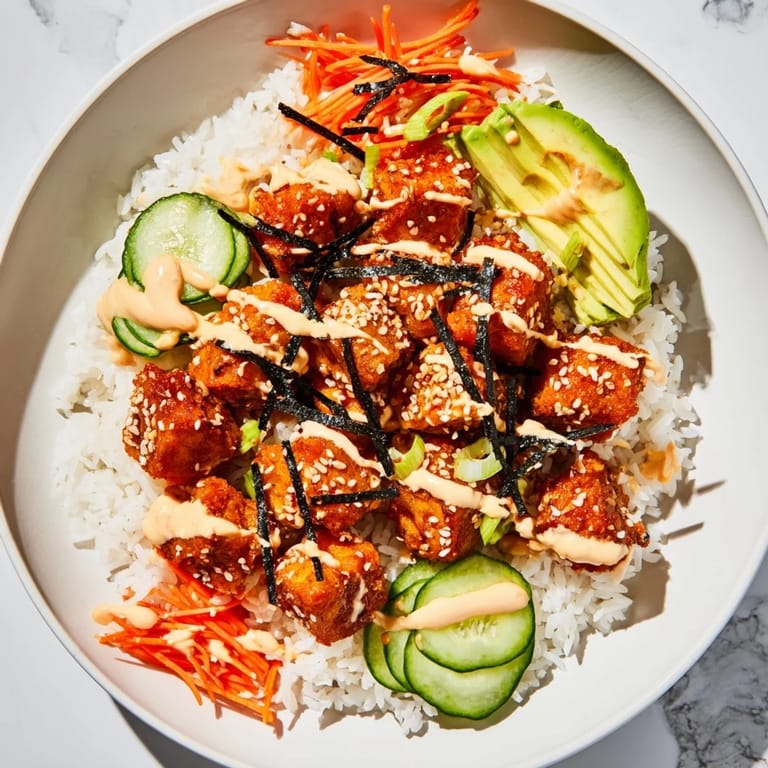
- Divide your cooked rice between two bowls and arrange the cucumber, avocado, pickled ginger, carrot, and nori strips on top in whatever pattern pleases you. This is where it becomes beautiful.
- Bring it all together:
- Top each bowl with the hot salmon bites and drizzle generously with your spicy mayo—don't be shy here, the sauce is what ties everything into one cohesive dish.
- Finish and serve:
- Sprinkle sesame seeds and fresh scallions over the top and eat it right away while the salmon is still warm and the vegetables are still crisp.
 Merken
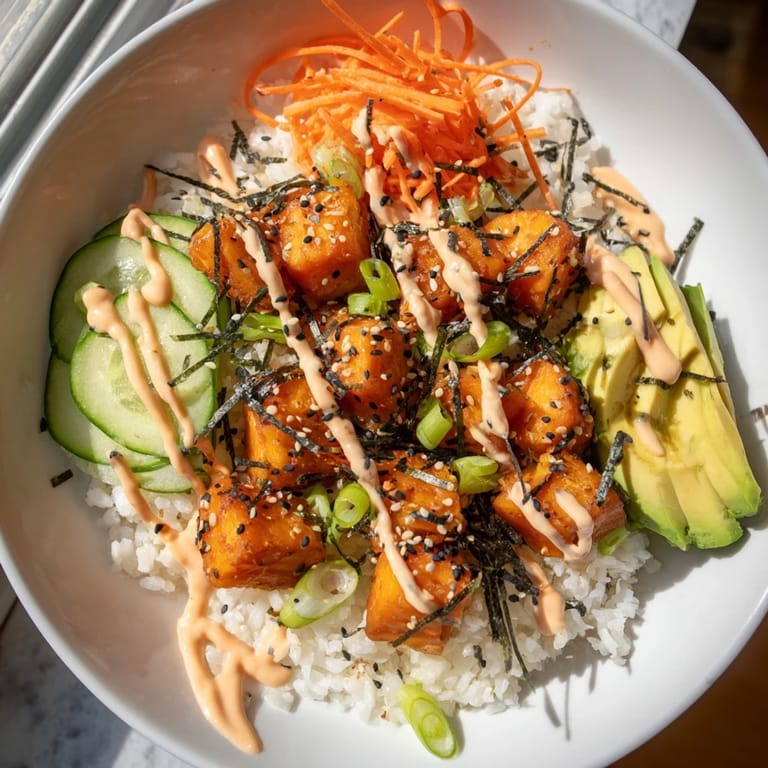
 There's something almost meditative about assembling this bowl—each element has its own texture and flavor, and you're the one deciding how they come together. It's become my go-to when I want to feel like I've cooked something special without the usual kitchen stress.
The Magic of Crispness
The air fryer is what makes this whole thing possible for a weeknight—it crisps the salmon exterior while keeping the inside tender, which an oven alone struggles to do without drying things out. I've tried both, and the air fryer wins every time. That golden exterior is what makes people stop and notice when they see it coming to the table.
Building Flavors in Layers
This bowl works because each component has its own moment to shine, and they're strategically layered to complement each other. The pickled ginger's acidity balances the salmon's richness, the avocado adds creaminess without competing, and the spicy mayo brings everything into harmony. It's not about having the most ingredients; it's about having the right ones in the right proportions.
Make It Your Own
Once you nail the basic formula, this bowl becomes endlessly adaptable based on what's in your fridge or what you're craving that day.
- Swap the jasmine rice for cauliflower rice if you're keeping carbs lower, or use sushi rice for a bit more stickiness.
- Add edamame or thinly sliced radish for extra crunch and nutrition without changing the flavor profile.
- Keep soy sauce and tamari nearby so people can adjust the saltiness themselves—not everyone likes the same level.
 Merken
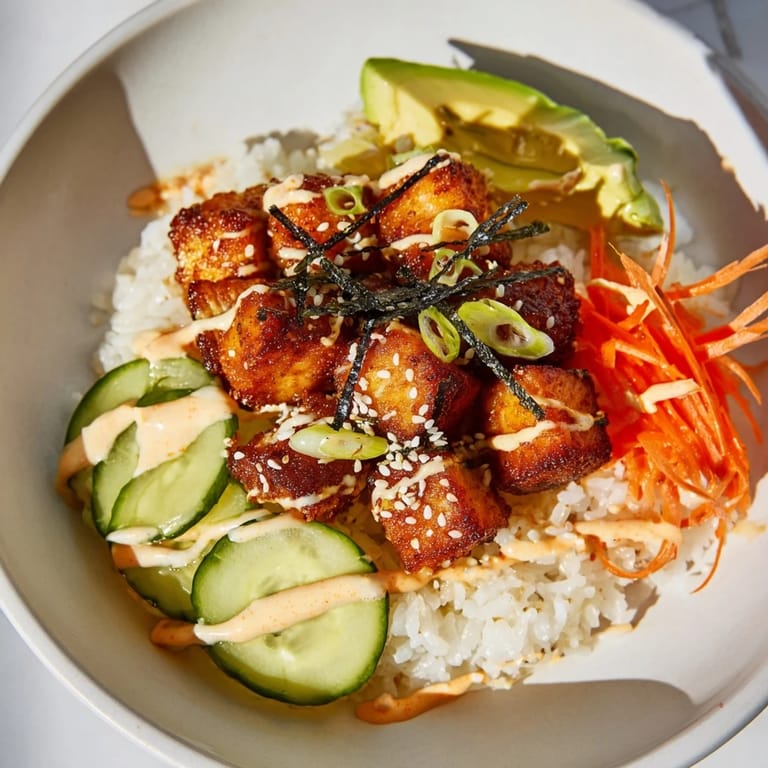
 This salmon bowl has become the recipe I come back to when I want something that tastes restaurant-quality but feels effortless. It's proof that simple ingredients, when treated with intention, become something worth remembering.
Fragen & Antworten zum Rezept
- → Wie wird der Lachs am besten knusprig?
Der Lachs wird mit Sesamöl und Sojasauce mariniert und dann im Airfryer oder Ofen bei 200°C für 7–10 Minuten gebacken, bis er goldbraun und knusprig ist.
- → Kann man den Reis durch etwas anderes ersetzen?
Ja, Blumenkohlreis ist eine low-carb Alternative, die gut mit den restlichen Zutaten harmoniert.
- → Welche Gemüsesorten passen besonders gut dazu?
Gurke, Avocado, Karotte und eingelegter Ingwer sorgen für Frische und Texturvielfalt.
- → Wie wird die würzige Mayo-Sauce zubereitet?
Mayonnaise wird mit Sriracha und Limettensaft vermischt, was der Sauce eine cremige, pikante Note verleiht.
- → Welche Zutaten liefern zusätzliche Knusprigkeit?
Sesamsamen, Frühlingszwiebeln und Nori-Streifen bringen knackige Akzente und Aroma.