 Merken
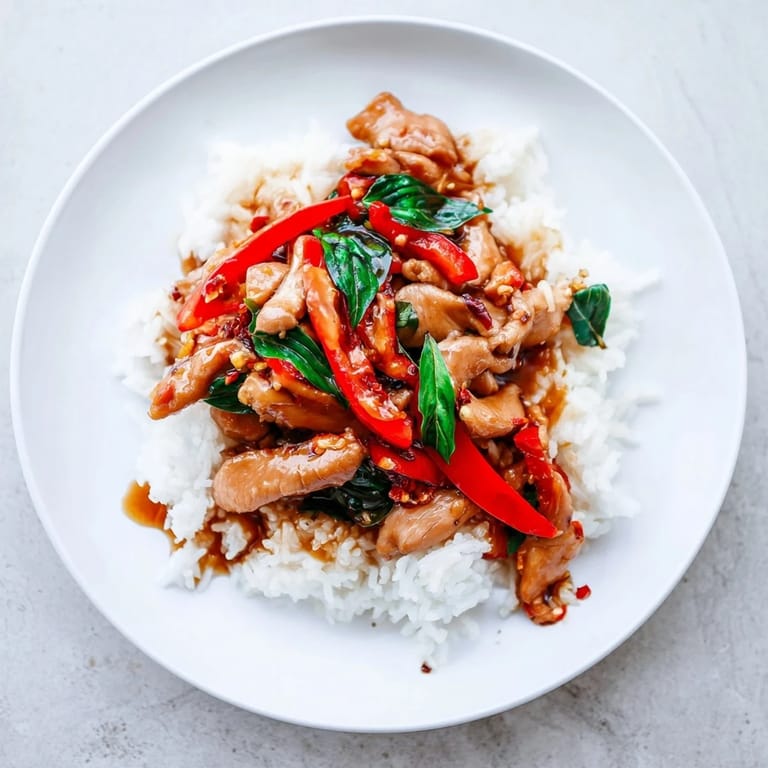
 There's a particular moment when a wok gets truly hot—the oil shimmers and dances just before you add anything to it, and suddenly the entire kitchen fills with that unmistakable Thai basil aroma. That's the moment I decided this dish would become a regular thing in our house. I was cooking for someone who claimed they didn't like basil, and watching their reaction when they tasted that holy basil chicken for the first time changed everything. The complexity isn't intimidating; it unfolds naturally in just thirty minutes. This is the kind of meal that tastes like you've been cooking all day, but the secret is knowing exactly when to let the heat do the work.
I made this for my neighbor one Thursday evening, and she showed up with wine expecting something elaborate. When I told her we'd be eating in twenty minutes, she laughed—then came back the next week asking for the recipe. She's made it four times since, and each time she texts me a photo of her bowl. That's when you know a dish works: not when the technique is flawless, but when people want to make it for themselves.
Ingredients
- Boneless, skinless chicken thighs or breasts, thinly sliced (500 g): Thighs stay juicier because they have a bit more fat, but breasts work if that's what you have—just don't overpower them with heat or they'll tense up and dry out.
- Soy sauce (3 tbsp): This is your base of savory depth, but it's not the whole story; it needs balance from the other sauces to sing.
- Oyster sauce (2 tbsp): It adds a subtle sweetness and richness that soy sauce alone can't deliver—this is what makes the sauce feel complete.
- Fish sauce (1 tbsp): Use just enough to add umami complexity without it tasting fishy; it's a background note that elevates everything else.
- Brown sugar (1 tbsp): A small amount rounds out the flavors and keeps the sauce from tasting too sharp or one-dimensional.
- Water (2 tbsp): This lets the sauce coat the chicken gently rather than cling too heavily.
- Garlic, minced (4 cloves): Toast it quickly in hot oil before anything else goes in, or the flavor stays raw instead of becoming sweet and mellow.
- Thai chilies, finely sliced (2–3): The heat builds as you cook, so start with two and add more if you like it spicy—you can always add heat, but you can't take it back.
- Onion, thinly sliced (1 small): It softens quickly and adds a mild sweetness that balances the savory sauce.
- Red bell pepper, thinly sliced (1): The color matters here—it's part of what makes the dish look alive and appetizing on the plate.
- Fresh holy basil leaves, packed (1 cup): Add this at the very end so it stays bright and peppery; cooking it too long turns it bitter and defeats the purpose.
- Cooked jasmine rice (4 cups): The jasmine variety has a gentle floral quality that won't fight with the basil's intensity.
- Lime wedges (optional): A squeeze brightens everything just before you eat—it's like turning up the volume on flavors you've already built.
Tired of Takeout? 🥡
Get 10 meals you can make faster than delivery arrives. Seriously.
One email. No spam. Unsubscribe anytime.
Instructions
- Make your sauce first:
- Combine the soy sauce, oyster sauce, fish sauce, brown sugar, and water in a small bowl and stir until the sugar dissolves. Set it aside so you're not fumbling with ingredients once the heat is on.
- Get your oil singing:
- Pour about 1 tablespoon of vegetable oil into a large skillet or wok and turn the heat to medium-high. Let it heat for a minute until it shimmers and moves easily across the pan.
- Bloom the garlic and chilies:
- Add your minced garlic and sliced Thai chilies to the hot oil and stir constantly for about 30 seconds. You'll know it's ready when the kitchen suddenly smells intensely fragrant—that's your cue to move fast before it burns.
- Soften the onion:
- Add the sliced onion and keep stirring for about 1 minute until the edges start to turn translucent and soft. The onion releases its natural sweetness as it cooks, which becomes part of your sauce.
- Cook the chicken through:
- Push the onion to the side and add the sliced chicken to the hot pan. Stir-fry for 4 to 5 minutes, breaking up any pieces that stick together, until the outside turns golden and the meat feels firm to the touch inside.
- Add the bell pepper:
- Toss in the red bell pepper and keep everything moving for another 2 minutes. It should still have a slight firmness when you bite into it—soft but not mushy.
- Bring the sauce together:
- Pour your prepared sauce mixture over everything and stir well, making sure it coats each piece. Let it bubble gently for 1 to 2 minutes so the flavors meld and the sauce thickens slightly around the chicken.
- Finish with the basil:
- Remove the pan from heat immediately and stir in your fresh holy basil leaves. The residual heat will wilt them just enough without destroying their bright, peppery character.
- Serve and enjoy:
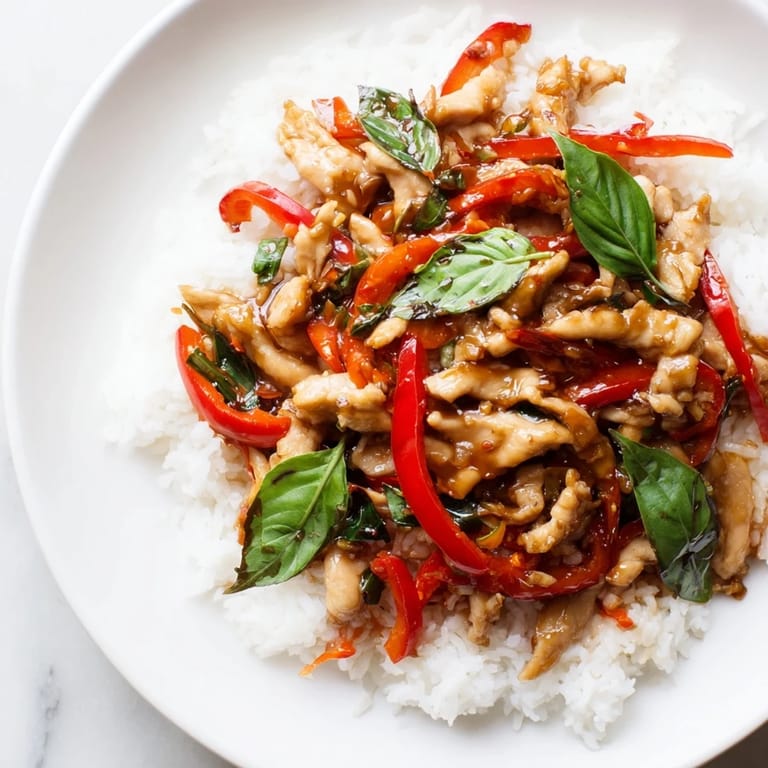
- Divide the jasmine rice among bowls and top each one with the fragrant chicken mixture. Add a lime wedge on the side if you want an extra squeeze of brightness.
 Merken
 I remember standing at the stove while my mom watched from the kitchen doorway, skeptical about the combination of soy, oyster, and fish sauce all at once. She took one bite and got quiet in that way she does when something surprises her. That silence felt like permission to make this dish as many times as I wanted.
About Holy Basil
Holy basil, also called tulsi or Thai basil, tastes completely different from the Italian basil you might be used to. It has a peppery, almost spicy edge that comes alive when you bruise the leaves or cook them briefly. If you can't find holy basil at your local market, Thai basil is the next best choice—it's less peppery but still aromatic. In a pinch, Italian basil works, though the dish loses some of that distinctive Thai character. The key is adding it at the very end, so it keeps that fresh, alive quality instead of becoming a footnote to the sauce.
Why This Cooks So Fast
The entire cooking time is built on one principle: high heat, quick movements, and knowing exactly when to stop. Stir-frying isn't about slow cooking; it's about keeping things moving so each piece gets coated evenly and nothing sits too long in the pan. This is why a wok or large skillet matters more than the ingredients themselves. The wider surface area lets steam escape, which means your chicken browns instead of steaming. Once you understand this rhythm, you can make this dish without thinking about it, which is exactly when it tastes best.
Serving and Pairing
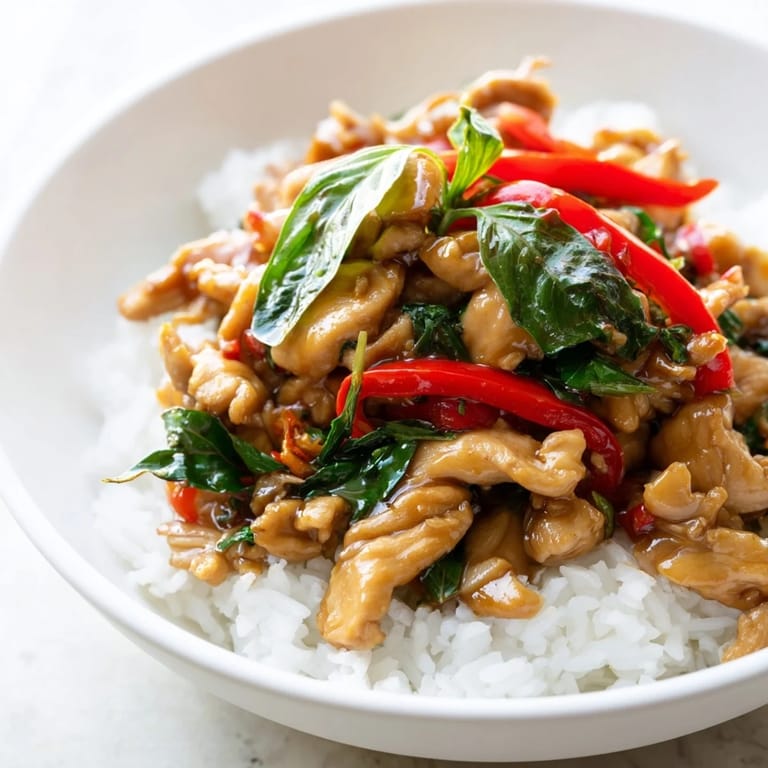
Jasmine rice is the obvious choice, but the real magic happens when you consider what else goes on the plate. Some nights I add a crispy fried egg on top, which turns the whole bowl into something richer and more luxurious. Other times, I keep it simple with just the rice and garnish, letting the basil chicken be the star. A squeeze of lime at the table makes everything taste sharper and more alive, as if you're tasting each component individually before they blend together. Serve this alongside a crisp white wine like Riesling, or simply with cold water and ice.
- A fried egg with a runny yolk makes the sauce even silkier and adds textural contrast.
- If you have extra cilantro or scallions, scatter them on top right before serving for freshness.
- This dish is best eaten hot, straight from the pan, while the basil is still fragrant and alive.
 Merken
 This is the kind of dish that tastes impressive but never feels stressful to make, which is exactly why I keep coming back to it. Whether you're cooking for one person or four, the technique stays the same and the results taste like you've been in that kitchen all afternoon.
Fragen & Antworten zum Rezept
- → Welche Basilikumart eignet sich am besten?
Heilbasilikum verleiht eine würzige, leicht scharfe Note, alternativ funktioniert auch Thai- oder Italienisches Basilikum.
- → Wie lässt sich die Schärfe anpassen?
Die Menge der Thai-Chilischoten kann nach Geschmack variiert oder durch Chili-Flocken ergänzt werden.
- → Mit welchem Reis passt das Gericht am besten?
Locker gekochter Jasminreis harmoniert ideal und nimmt die Sauce gut auf.
- → Kann man das Gericht glutenfrei zubereiten?
Ja, durch die Verwendung glutenfreier Soja- und Austernsauce bleibt es glutenfrei.
- → Was sind geeignete Beilagen dazu?
Ein frischer Salat oder gedämpftes Gemüse ergänzen das Gericht wunderbar.
- → Wie kann man das Aroma verstärken?
Ein zusätzlicher Spritzer Limettensaft oder ein Spiegelei rundet den Geschmack ab.