 Merken
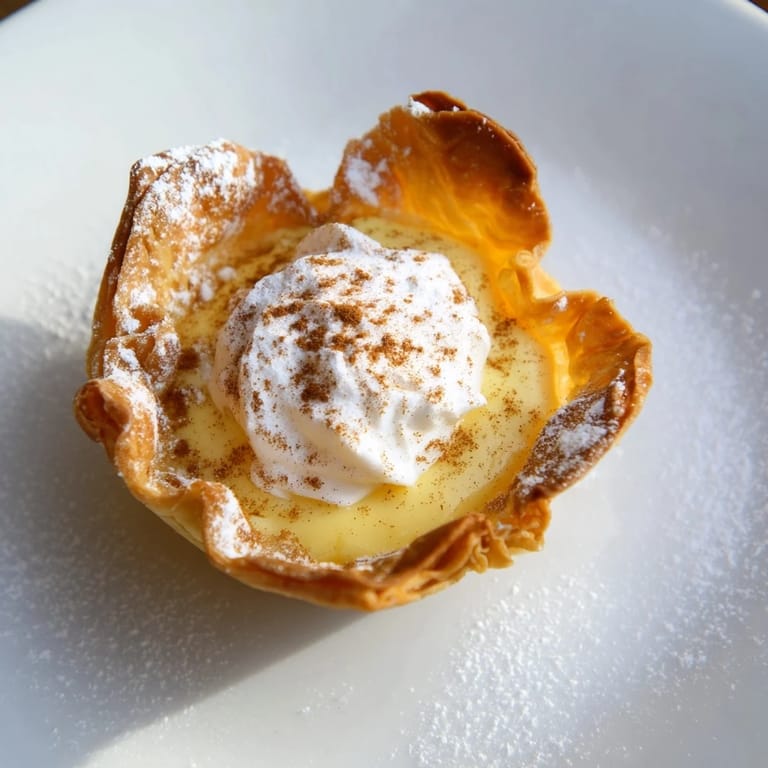
 The first time I bit into a Portuguese egg tart at a tiny bakery in Lisbon, I understood why these little golden cups were worth the early morning queue. Something about the contrast—crispy, butter-soaked phyllo giving way to silky custard infused with cinnamon and just a whisper of vanilla—felt like discovering a secret. Years later, I still remember the powdered sugar dusting my fingers as I stood on a cobblestone street, and I knew I had to learn to make them at home.
I made these for my neighbor last spring when she brought over a cutting board she'd lent me months earlier, and somehow we ended up sitting on her porch eating three of these tarts between us, talking until the light turned gold. She asked for the recipe that day, and I realized these little things had become something more than dessert in our house—they were an excuse to slow down.
Ingredients
- Phyllo pastry sheets: These paper-thin layers are what gives you that shattering crispness; don't skip the butter between each layer, as it's what makes them golden and flaky.
- Unsalted butter, melted: Use good butter here—it matters more than you'd think in something this delicate.
- Whole milk: The base of your custard, lending a gentle richness that cream alone can't achieve.
- Cornstarch: This is your thickener, so don't swap it for flour or your filling will break.
- Heavy cream: Non-negotiable for that silky texture that coats your tongue.
- Granulated sugar: You'll whisk this into the egg yolks, and trust me, your arm will know it worked.
- Egg yolks: The heart of the custard; save those whites for scrambled eggs tomorrow.
- Pure vanilla extract: A teaspoon is all you need to make people ask what that incredible flavor is.
- Ground cinnamon: Half a teaspoon in the custard, plus more for the finish—this spice is what makes these unmistakably Portuguese.
- Salt: A pinch that makes everything else taste more like itself.
- Powdered sugar and cinnamon for topping: The final flourish that catches the light when you set them on a plate.
Tired of Takeout? 🥡
Get 10 meals you can make faster than delivery arrives. Seriously.
One email. No spam. Unsubscribe anytime.
Instructions
- Heat your oven and prep the phyllo:
- Set your oven to 200°C (400°F). Brush each phyllo sheet lightly with melted butter—you want them glistening but not swimming in it. Stack 3 buttered sheets together, then cut into squares large enough to line your muffin cups.
- Shape the pastry cups:
- Gently press each phyllo stack into the muffin tin cups, letting the edges rise slightly above the rim for a prettier presentation. This is where your patience pays off—rushing will tear the delicate sheets.
- Blind bake the shells:
- Bake for 8–10 minutes until they're pale golden and crispy, then set them aside on a wire rack. They'll crisp up even more as they cool.
- Make the custard:
- In a medium saucepan, whisk milk and cornstarch together until completely smooth—lumps are your enemy here. Add the heavy cream, sugar, egg yolks, vanilla, cinnamon, and salt, whisking until it's all combined and glossy.
- Cook the filling:
- Place the saucepan over medium heat and whisk constantly for about 5–7 minutes, until the custard thickens enough to coat the back of a spoon. You'll feel the moment it's ready—the whisking gets a tiny bit easier as the starch does its work.
- Fill the cups:
- Divide the warm custard among the phyllo cups, filling each one nearly to the brim. Work quickly so the custard doesn't cool too much.
- Final bake:
- Bake for 8–10 minutes until the custard is just set—it should jiggle ever so slightly in the center if you gently shake a cup. The tops will turn a light golden brown.
- Finish and serve:
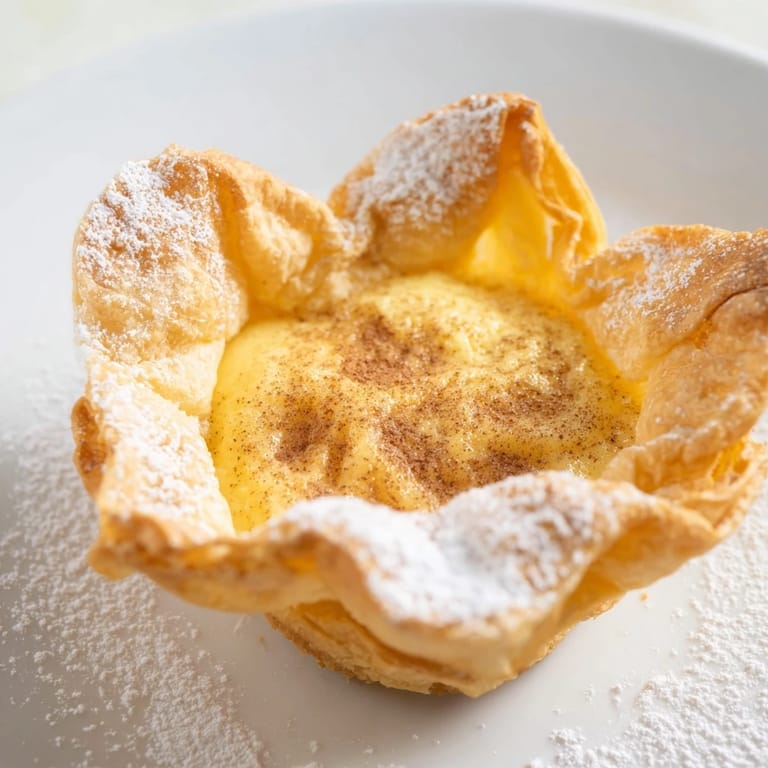
- Let them cool for a few minutes, then dust generously with cinnamon and powdered sugar. Serve slightly warm, when the phyllo is still crackling and the custard is creamy.
 Merken
 My daughter came home from school one afternoon and found these cooling on the counter, and the look on her face when she bit into one was the kind of small joy that reminds you why you cook. That's when I knew this recipe had to stay in our regular rotation.
The Story Behind Portuguese Egg Tarts
These tarts descend from a long lineage of Portuguese pastéis de nata, born in monasteries centuries ago when eggs were abundant and creativity with leftovers was essential. The combination of phyllo instead of traditional puff pastry is a modern twist that feels just as authentic, especially if you've ever experienced the frustration of making laminated dough from scratch. What matters is that moment when you realize custard and crispy pastry were meant to be together, and that understanding is timeless.
Timing and Make-Ahead Strategy
These tarts are deliberately quick—40 minutes from oven preheat to plate—which means you can make them for weeknight dessert without much fuss. You can prep the phyllo cups a few hours ahead, storing them in an airtight container, then fill and bake them closer to serving time. This flexibility is part of their charm; they fit into your life rather than demanding you rearrange your schedule.
Serving and Pairing Ideas
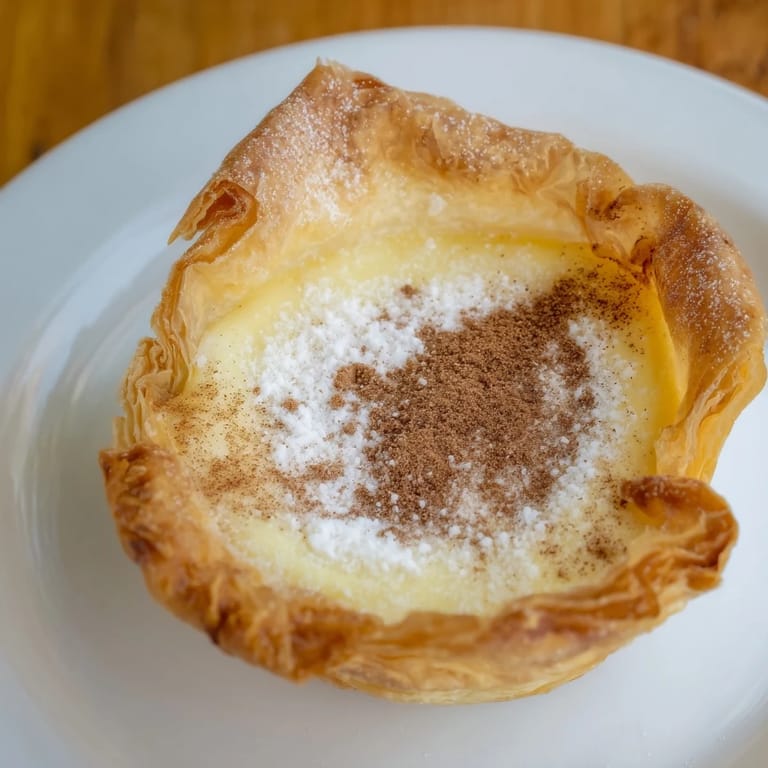
Warm tarts are perfect with a shot of strong espresso, or if you're feeling indulgent, a glass of chilled white port—the traditional pairing that Lisbon taught me. They're also stunning on a dessert table, dusted with powdered sugar and cinnamon, where they catch the light and practically demand to be photographed. A simple scoop of vanilla ice cream melts into the warm custard if you're feeling extra.
- Serve them still warm when the phyllo is at its crispiest and the custard is at its creamiest.
- Dust generously with powdered sugar and cinnamon just before serving for maximum visual impact.
- Pair with espresso, white port, or even a light dessert wine like a Moscato.
 Merken
 These tarts have a way of making ordinary afternoons feel a little more special, and that's really all a dessert needs to do. Make them when you want to remind yourself—and the people you're feeding—that good things don't need to be complicated.
Fragen & Antworten zum Rezept
- → Wie wird der Phylloteig besonders knusprig?
Mehrere dünne Phylloblätter werden mit Butter bestrichen und geschichtet, sodass sie beim Backen luftig und knusprig werden.
- → Kann ich die Füllung auch ohne Zimt verfeinern?
Ja, eine Prise Zitronenschale oder Vanilleextrakt alleine bieten ebenfalls ein feines Aroma.
- → Wie lange sind die Eiertörtchen haltbar?
Im Kühlschrank aufbewahrt halten sie sich bis zu zwei Tage und sollten vor dem Verzehr kurz im Ofen aufgefrischt werden.
- → Welches Backgeschirr ist ideal für diese Törtchen?
Ein 12er-Muffinblech eignet sich optimal, um die Teigschalen gleichmäßig zu formen und zu backen.
- → Sind die Zutaten für die Füllung leicht verfügbar?
Alle Zutaten wie Milch, Eier, Zucker und Gewürze sind in den meisten Supermärkten gut erhältlich.