 Merken
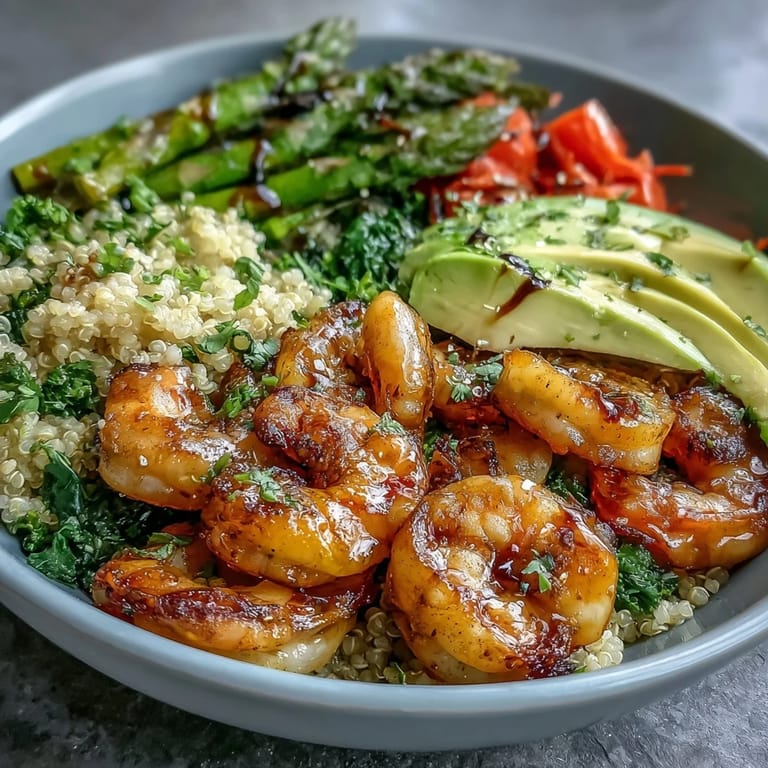
 My sister called me mid-afternoon, stressed about a work presentation, and I knew exactly what she needed—something colorful, quick, and honest. I'd been making these rainbow bowls on lazy weekends, but that day felt different, like the bright vegetables were doing more than just filling a plate. Somehow, assembling those bowls together while she talked through her nerves turned into something therapeutic, and by the time we finished eating, she seemed lighter. That's when I realized this dish wasn't just about nutrition; it was about bringing order and vibrancy to days that felt a bit too grey.
I made this for a friend who'd just started a fitness journey, and instead of feeling like punishment food, she actually looked forward to lunch the next day. She said the avocado made it feel indulgent, the balsamic dressing gave it sophistication, and the fact that everything had a place on the bowl made eating feel intentional. That moment taught me that healthy eating doesn't have to taste clinical or look boring—it just needs permission to be delicious.
Ingredients
- Shrimp, 200 g: Large shrimp cook quickly and evenly, turning pink as a reliable signal they're done; buy them already peeled if you want to skip that step, but save the shells for stock if you're feeling ambitious.
- Quinoa, 150 g cooked: This grain holds its fluffy texture and doesn't get mushy like rice, plus it's complete protein on its own, which means your bowl actually keeps you full.
- Broccoli florets, 100 g: Brief blanching keeps them snappy and bright green instead of dull, and cold water stops them dead in their tracks so they don't keep cooking.
- Asparagus, 100 g: Cut into 2-inch pieces so they're easy to eat with a fork and blanch at the same time as the broccoli since they need identical timing.
- Red cabbage, 100 g sliced: Raw cabbage adds that satisfying crunch and holds up beautifully even if you make the bowl hours ahead, unlike softer vegetables that wilt.
- Tomato, 1 medium: Choose one that's ripe but still firm so it doesn't turn mushy; a slightly warm tomato tastes better than a cold one, so let it sit at room temperature before dicing.
- Avocado, 1 ripe: Slice it just before assembly or it'll brown, and choose one that yields slightly to thumb pressure but isn't mushy.
- Balsamic vinegar, 2 tbsp: The tanginess wakes up all the vegetables, and a quality bottle makes a real difference—you can taste the complexity.
- Extra virgin olive oil, 1 tbsp for dressing: This goes into the dressing where its flavor matters, not the cooking oil which can smoke.
- Olive oil, 1 tbsp for cooking: Regular olive oil is fine here since heat compromises the delicate flavor of extra virgin.
- Dijon mustard, 1/2 tsp: This emulsifies the dressing so it doesn't separate and adds subtle heat that ties everything together.
Tired of Takeout? 🥡
Get 10 meals you can make faster than delivery arrives. Seriously.
One email. No spam. Unsubscribe anytime.
Instructions
- Get your water boiling and your vegetables ready:
- Fill a small pot with salted water and bring it to a rolling boil while you trim the asparagus and separate the broccoli into bite-sized florets. The salt seasons the vegetables as they cook, so don't skip it.
- Blanch the broccoli and asparagus:
- Drop both into the boiling water and set a timer for 2–3 minutes—you're looking for that moment when they turn impossibly bright green and a fork slides through with just a tiny resistance. Drain them immediately and plunge them into a bowl of cold water or hold them under cold running water to stop the cooking, which is the secret to keeping them crisp instead of mushy.
- Cook the shrimp until they curl and turn pink:
- Heat olive oil in your skillet over medium heat until it shimmers, then add the shrimp and season generously with salt and pepper. Let them sit undisturbed for 2–3 minutes until the underside turns opaque, then flip and cook another 1–2 minutes—they'll curl up and turn pink, which means they're done. Don't wait for them to turn bright red all over or they'll be tough.
- Whisk your dressing with intention:
- In a small bowl, combine the balsamic vinegar, extra virgin olive oil, Dijon mustard, and a pinch of salt and pepper. Whisk until it looks glossy and emulsified, which takes about 30 seconds of actual whisking motion.
- Build your bowls like you're composing art:
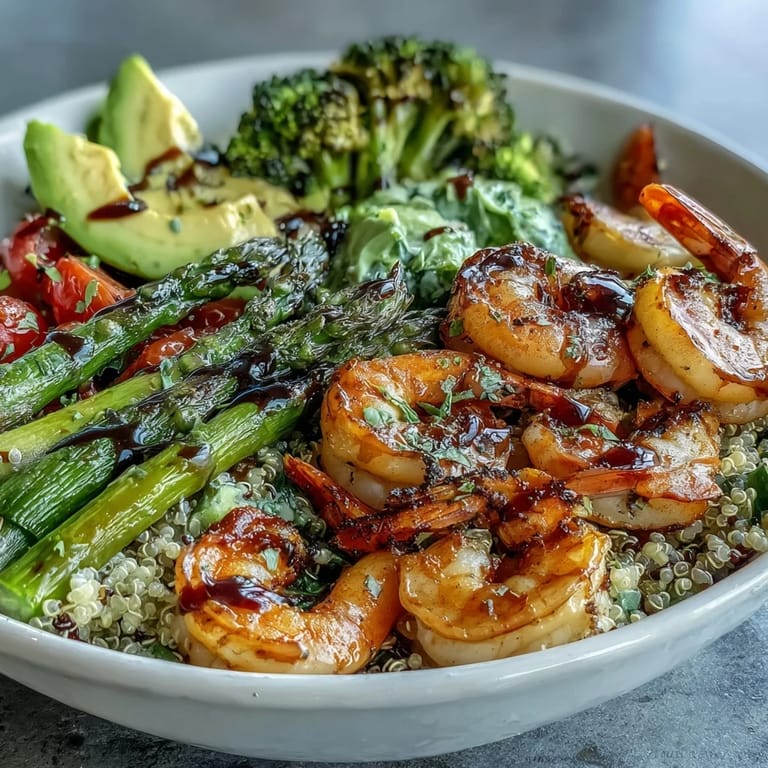
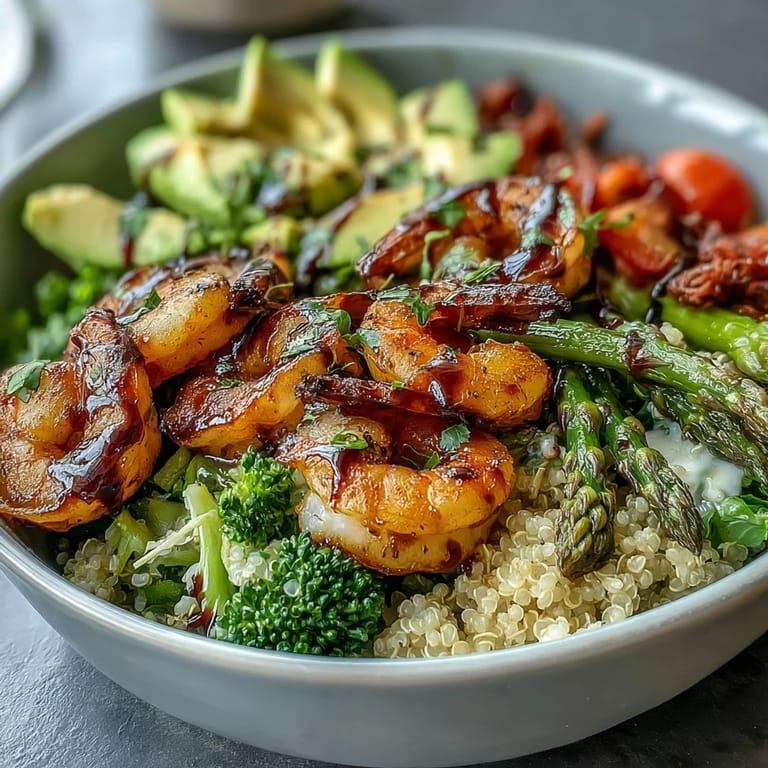
- Divide the warm quinoa between two bowls, then arrange everything else in colorful sections around it—shrimp in one spot, avocado in another, so each bite captures something different. The warm quinoa will gently warm the avocado without cooking it, which is exactly what you want.
- Dress it and eat it right away:
- Drizzle the balsamic dressing over the entire bowl just before serving so everything gets a taste of it. Don't dress it too early or the raw vegetables will start releasing water and the whole thing gets soggy.
 Merken
 My neighbor once told me she kept these bowls in her rotation because they made her feel like she was taking care of herself without the dread of eating the same thing every day. She'd change the vegetables based on what looked good at the market, and suddenly healthy eating became an adventure instead of a chore. That's when I understood: the structure of this bowl gives you permission to play.
Why the Colors Matter
Every color represents different nutrients—the deep green of broccoli has different compounds than the red of the cabbage or the orange undertones of a ripe tomato. When you eat across the spectrum, you're not just making something pretty; you're actually giving your body a wider range of what it needs. I started noticing that days when my bowl looked properly rainbow, I had more sustained energy than days when I got lazy and skipped a vegetable. It sounds simple, but eating with your eyes first teaches your body what it's about to receive.
The Shrimp Question
Shrimp cooks so fast that it's easy to overthink it or underthink it—one minute it's translucent and the next it's rubbery. The trick is understanding that they continue cooking slightly off heat, so you want to pull them when they're just barely opaque in the center. I learned this the hard way by serving rubbery shrimp to someone I was trying to impress, and now I'm almost aggressive about not overcooking them. A digital thermometer registers 120°F if you want to be technical, but honestly, the curl and color change is your best guide.
Making It Your Own
Once you understand the bones of this bowl—grain, protein, vegetables, dressing—you can swap almost anything and it still works. I've made versions with roasted chickpeas, grilled chicken, or even just extra nuts when I'm out of shrimp, and the formula holds up beautifully. The balsamic dressing is flexible too; sometimes I add a touch of honey for sweetness or more mustard for bite, depending on what vegetables I'm using.
- Add pumpkin seeds or toasted almonds for crunch that holds up even if the bowl sits for a bit.
- Roast the vegetables instead of blanching them if you want deeper flavor and don't mind warmth in the bowl.
- Make extra dressing because you'll want it for leftovers, and a good balsamic dressing transforms even cold vegetables the next day.
 Merken
 This bowl taught me that nourishment doesn't have to feel like discipline—it just needs color, intention, and a moment of care. Make one today and notice how it changes your afternoon.
Fragen & Antworten zum Rezept
- → Wie lange bleibt das Gericht im Kühlschrank frisch?
Die zubereitete Schale hält sich 2-3 Tage im Kühlschrank, wenn sie luftdicht verschlossen aufbewahrt wird. Am besten bewahren Sie das Dressing separat auf und geben es erst vor dem Servieren hinzu, damit das Gemüse knackig bleibt.
- → Kann ich die Garnelen durch eine pflanzliche Alternative ersetzen?
Ja, für eine vegane Version eignen sich geröstete Kichererbsen, mariniertes Tofu oder Tempeh hervorragend als Proteinquelle. Diese Alternativen bringen ebenfalls Biss und Geschmack in die Schale.
- → Welches Gemüse kann ich variieren?
Sie können je nach Saison verschiedene Zutaten verwenden. Gurke, Paprika, Rettich, geriebene Möhren oder gebratener Champignons passen wunderbar zu diesem Konzept. Wichtig ist, verschiedene Farben und Texturen zu kombinieren.
- → Ist Quinoa zwingend notwendig?
Quinoa kann durch andere Getreide wie Couscous, Bulgur, Hirse oder braunen Reis ersetzt werden. Für eine kohlenhydratarme Variante eignet sich Blumenkohlreis als Basis hervorragend.
- → Wie blanchiere ich Gemüse richtig?
Bringen Sie Salzwasser zum Kochen und geben Sie das Gemüse für 2-3 Minuten hinein. Anschließend sofort in Eiswasser abschrecken, um den Garvorgang zu stoppen und die leuchtende Farbe zu bewahren.
- → Welches Dressing passt besonders gut?
Das Balsamico-Dressing bringt eine angenehme Säure, die perfekt mit der cremigen Avocado harmoniert. Alternativ können Sie ein Tahini-Limetten-Dressing oder ein leichtes Joghurt-Dressing mit Kräutern verwenden.