 Merken
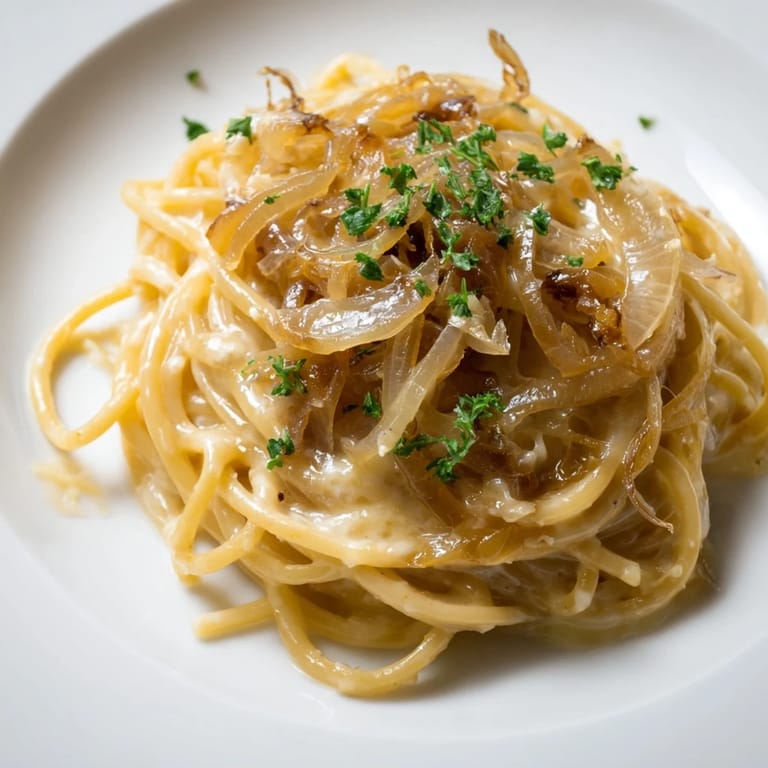
 There's something magical about watching onions transform in a hot pan, going from sharp and peppery to silky and sweet. I stumbled onto this dish on a cold evening when I had a pot, some onions, and the desire to skip a second pan. What started as lazy cooking became something I crave all winter—it tastes like French onion soup fell into a bowl of pasta and they became best friends.
I made this for friends on a rainy Saturday, and halfway through dinner, someone asked if I'd ordered it. The combination of deeply browned onions, the subtle sweetness from the wine, and that creamy cheese moment when everything comes together—it silenced the whole table. That's when I knew this wasn't just weeknight food, it was the kind of meal people ask you to repeat.
Ingredients
- 3 large yellow onions, thinly sliced: Yellow onions are the sweet ones; they caramelize into pure gold when you give them time and a sprinkle of sugar.
- 2 cloves garlic, minced: Just enough to whisper in the background without overpowering the onion's moment.
- 350 g dry fettuccine or linguine: The wider ribbons catch the broth beautifully, though any long pasta works if that's what you have.
- 60 ml dry white wine: The acidity cuts through richness and adds depth; don't skip it or use cooking wine.
- 1 L vegetable or beef broth: Beef makes it heavier and richer; vegetable keeps it lighter and lets the onions shine.
- 2 tbsp unsalted butter and 2 tbsp olive oil: The combination gives you the best browning without burning.
- 120 g Gruyère cheese and 60 g Parmesan: Gruyère is the star here, creamy and nutty; Parmesan adds bite and complexity.
- 1 tsp sugar, 1/2 tsp dried thyme, 1 bay leaf: The sugar kickstarts caramelization, thyme adds herbaceous warmth, and the bay leaf keeps everything grounded.
Tired of Takeout? 🥡
Get 10 meals you can make faster than delivery arrives. Seriously.
One email. No spam. Unsubscribe anytime.
Instructions
- Caramelize the onions:
- Heat butter and oil together, then add your sliced onions with a pinch of sugar. Let them sit for a few minutes without stirring, then give them a gentle stir every few minutes. You're aiming for deep golden-brown edges, not pale or rushed. This takes about 20 to 25 minutes, and yes, it's worth every minute of patience.
- Wake up the garlic:
- Add minced garlic and listen for that fragrant sizzle. Just one minute is enough—you want to smell it, not burn it.
- Deglaze with wine:
- Pour in the white wine and scrape the bottom of the pan with your spoon, gathering all those caramelized bits that taste like liquid gold. Let it bubble down until mostly evaporated, which takes about 2 minutes of attentive stirring.
- Build the broth base:
- Add thyme, bay leaf, and broth. Bring it to a gentle boil, then you're ready for the pasta.
- Cook the pasta in the broth:
- Add uncooked pasta directly to the pot, stir it well to prevent sticking, then reduce heat to medium-low. Simmer uncovered for 10 to 12 minutes, stirring often. Watch as the pasta absorbs the broth and everything comes together into a creamy mixture.
- Finish with cheese:
- Fish out the bay leaf, then add both cheeses. Stir gently until everything melts into a silky sauce. Taste and adjust salt and pepper.
 Merken
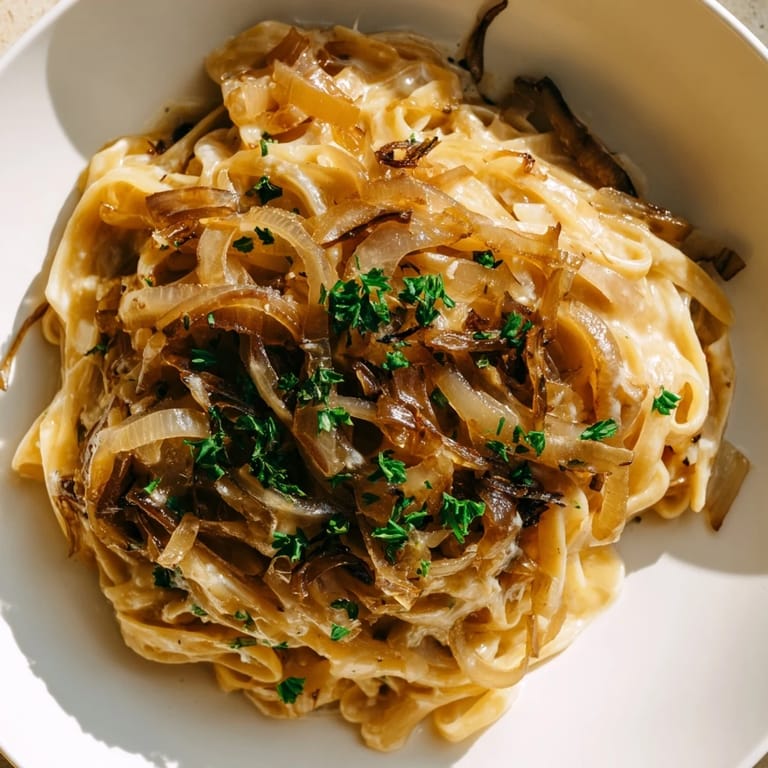
 This dish taught me that the best comfort food doesn't need a crowd or special occasion. Sometimes it just needs an ordinary Tuesday and someone willing to let onions do their magic. Every time I make it, I'm reminded why slowing down in the kitchen leads to the best flavors.
Why This Tastes Like French Onion Soup in Pasta Form
French onion soup is all about the slow caramelization of onions until they're sweet and deeply browned, then a good broth and melted cheese on top. This dish keeps that soul but lets the pasta soak up every bit of that gorgeous liquid instead of sitting on top. You get the same cozy, umami-rich flavor but in every bite, not just when you dip your spoon.
Choosing Your Cheese Wisely
Gruyère is traditionally used for French onion soup because it melts smoothly and has that nutty, slightly sweet character. Parmesan adds sharpness and prevents the sauce from feeling too heavy. If you only have one type, Gruyère alone will work beautifully, but the combination is where the magic lives. Whatever you do, skip pre-shredded cheese—the anti-caking agents stop it from melting cleanly into a sauce.
Making It Your Own
Once you've made this a few times, it becomes your canvas. A handful of sautéed mushrooms adds earthy depth, a splash of cognac instead of wine makes it luxurious, and a hit of fresh thyme at the end brightens everything. Some people add a pinch of nutmeg to the broth, others finish with crispy breadcrumbs. The structure is forgiving because the caramelized onions and cheese are doing all the heavy lifting.
- Try beef broth if you want richness that feels heavier and more substantial.
- If you skip the wine, add an extra splash of broth and finish with a tiny squeeze of lemon juice for brightness.
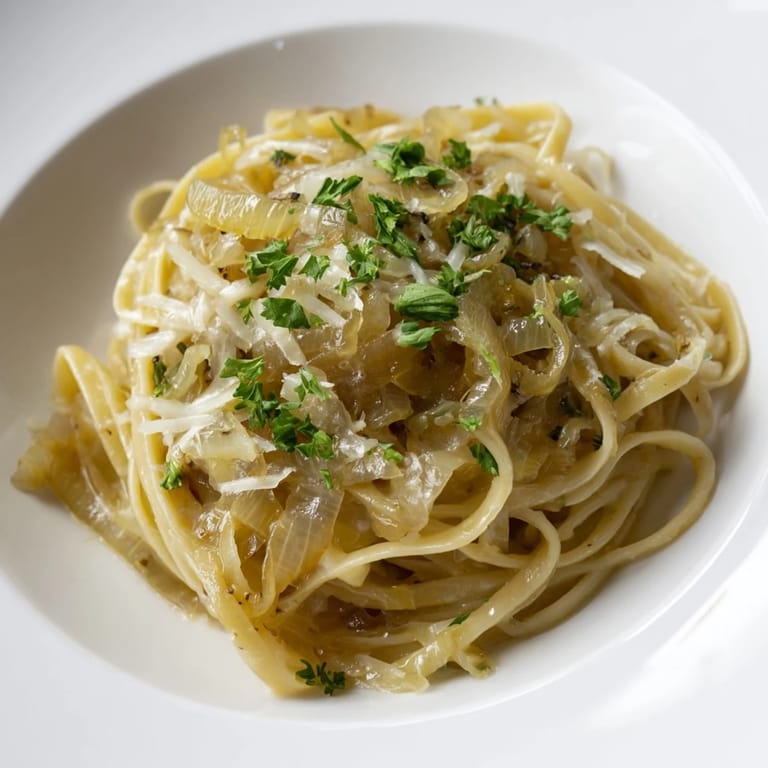
- Serve it in shallow bowls so you can appreciate the cream-colored sauce.
 Merken
 This is the kind of recipe that bridges seasons and moods—equally perfect for a solo dinner with a good book or a gathering where everyone leaves satisfied. Make it once, and it becomes the dish people ask you to bring.
Fragen & Antworten zum Rezept
- → Wie karamellisiere ich die Zwiebeln richtig?
Zwiebeln langsam bei mittlerer Hitze mit Butter und Öl anbraten, gelegentlich umrühren, bis sie tief goldbraun und süßlich sind. Das dauert etwa 20-25 Minuten.
- → Kann ich anstelle von Gemüsebrühe auch Rinderbrühe verwenden?
Ja, Rinderbrühe verleiht dem Gericht eine intensivere Fleischnote und macht es noch herzlicher.
- → Welche Käsesorten passen am besten zu diesem Gericht?
Gruyère und Parmesan sorgen für cremige und würzige Aromen. Alternativ kann auch Schweizer Käse verwendet werden.
- → Wie verhindere ich, dass die Pasta matschig wird?
Die Pasta sollte während des Kochens gelegentlich umgerührt werden, damit sie gleichmäßig gart, und nicht zu lange gekocht werden, bis sie al dente ist.
- → Kann ich das Gericht vegetarisch zubereiten?
Ja, durch Verwendung von Gemüsebrühe anstelle von Fleischbrühe bleibt das Gericht vegetarisch.